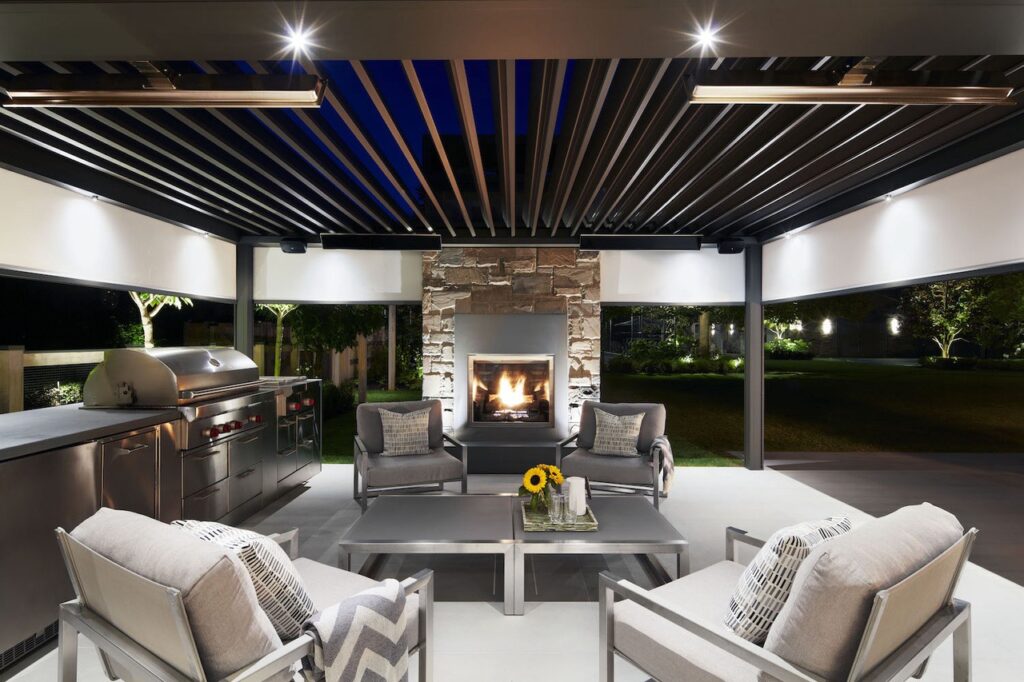
Outdoor heating appliances, frequently referred to as patio heaters, are a primary consideration for extending the outdoor season. However, a key question for many is whether gas or electric outdoor heaters are the superior choice. There are obvious benefits to both. Ultimately, which type works best will depend on the size of the area to be heated, existing power sources, and also personal preference in regard to appearance and control of the heater. Let’s take a look at some of the key arguments for each option.
At a Glance
- Choosing between gas and electric outdoor heating appliances depends on space size, ventilation, available power sources, and how much control and flexibility you want over your outdoor heating.
- Electric patio heaters are highly versatile, safe for semi-enclosed spaces, wind-resistant, and ideal for design-focused areas thanks to wall, ceiling, and recessed mounting options with minimal maintenance.
- Gas patio heaters deliver higher heat output and wider coverage, making them well suited for larger, well-ventilated outdoor spaces, with options for natural gas or Freestanding propane use.
- Advanced designs like Bromic gas and electric heaters use infrared technology (often called radiant) to spread heat efficiently while reducing wind impact and visual clutter.
- Operating costs vary by fuel type and usage, but with proper planning and layout, Bromic Design Services can help identify the most efficient and effective heating solution for your outdoor space.
Electric outdoor heaters – versatile with outdoor appeal
One of the key advantages of having an electric outdoor heating system is flexibility. There is very little an electric heater can’t do. With heat coverages of up to 160ft2, they’re great for smaller spaces that might not have a lot of natural ventilation as there is no concern over carbon monoxide emissions. They can also be used in areas prone to wind as there is no risk of the heater blowing out. A lot of the top end models can also be dimmed to ensure they offer just the right amount of heat. For even more control, pair your electric heater with your home automation system. For a premium option, explore the Platinum Smart-Heat® Electric series designed with an ultra-slim profile and powerful radiant heat.
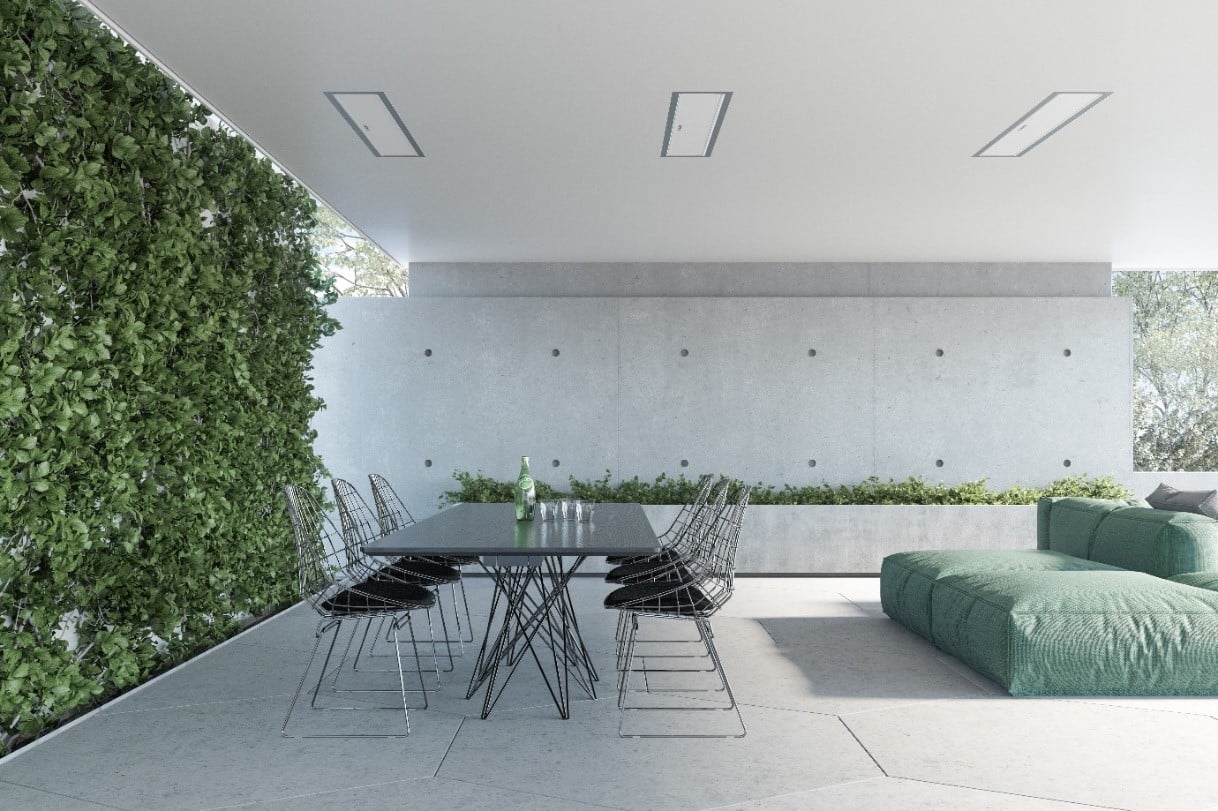
They also tend to offer more flexibility when it comes to mounting options, as they require smaller clearances. As such they’re not only great underneath umbrellas or awnings but can also be recessed directly into flat ceiling. This makes them the ideal outdoor heating solution for design-focused spaces that want to preserve a sleek, minimal appearance. Once installed, they require very little maintenance other than a quick wipe-down or dusting to remove cobwebs. In addition, there are also electric heaters that are available in 316 marine-grade stainless steel to reduce the risk of corrosion in harsh coastal environments. Explore our electric outdoor heaters for sleek, efficient solutions designed for covered and semi-enclosed spaces.
Gas outdoor heaters – powerful with great coverage
Gas outdoor heaters come in either natural gas or propane versions and are known for their powerful heat output. Depending on their power they can heat spaces of up to 215ft2. Contrary to electric heaters they do require a least 25% of the space to be open to allow enough natural airflow for safe operation. They are therefore a great addition to larger, well-ventilated outdoor spaces, where they can be easily switched on and off via remote control or scheduled by a timer. While natural gas models will require to be attached to a gas line, portable propane models can run off an internal propane tank and can be moved around as required. This also means they can be easily moved out of the way and stored away during summer.
Although gas heaters are more susceptible to wind than electric models, systems like the Bromic Platinum Smart-Heat® Gas outdoor heater, are equipped with ceramic fascias that not only protect the burner from wind, but also ensure that heat is spread evenly. Most manufacturers will recommend to inspect gas heaters on a regular basis to ensure there is no debris like spiderwebs or insects covering the heating elements and blocking the burner from sparking.

Which outdoor heater is right for your space?
Gas patio heaters are best for large, open-air spaces that need maximum heat output and wide coverage. Electric outdoor heaters are ideal for covered or semi-enclosed areas, offering directional radiant heat, minimal maintenance, and a more design-integrated installation. The right choice depends on your space layout, ventilation, and how you plan to use your outdoor area. For homeowners planning a backyard upgrade, explore our residential outdoor heating solutions to find the right setup for your space.
Still unsure? Explore our outdoor heating design service to get a tailored recommendation.
Common questions about outdoor patio heaters
Are electric or gas patio heaters more efficient?
Electric patio heaters are more energy-efficient in smaller or covered spaces because they deliver direct radiant heat with minimal loss. Gas heaters provide higher heat output, making them more effective for large, open-air areas.
Can patio heaters be used in covered spaces?
Electric outdoor heaters are ideal for covered or semi-enclosed spaces due to their clean operation and directional heat. Gas heaters require proper ventilation and are best suited for open-air environments.
Which type of patio heater is better for restaurants?
Electric patio heaters are often preferred for covered or design-focused restaurant spaces, while gas heaters are better for large, open patios that require higher heat output and broader coverage.
Do patio heaters work in cold or windy conditions?
Infrared patio heaters perform well in cold conditions because they heat people and surfaces directly rather than the air. Electric heaters are less affected by wind, while gas heaters can lose efficiency in very windy environments.
Are premium patio heaters worth the investment?
For residential and commercial outdoor spaces, investing in a high-quality heater can reduce replacement frequency and ensure a more reliable heating experience over time. Features like directional infrared heat, corrosion-resistant materials, and smart control integration also contribute to overall value.
Do outdoor patio heaters hold up in coastal environments?
Outdoor patio heaters installed near coastal areas must be designed to withstand salt air and moisture exposure. High-quality heaters use corrosion-resistant materials such as marine-grade stainless steel and protective finishes to maintain performance and appearance over time.
Regular maintenance and proper installation also play a key role in longevity. Choosing a heater specifically engineered for outdoor durability ensures consistent heat output and reduces the risk of wear in harsh environments.
Bromic offers outdoor heating solutions designed for durability in demanding conditions, making them suitable for coastal and high-exposure environments.
For a deeper look at materials, installation, and long-term performance, explore our guide on outdoor heating in coastal environments.
What about costs?
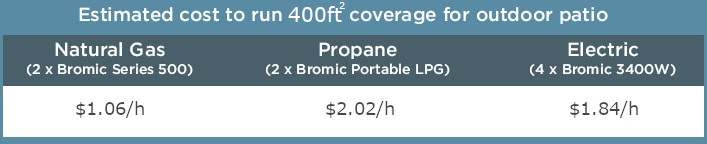
Running costs will vary per model and power output (wattage for electric and BTU for gas). In general, natural gas tends to be the cheapest way to heat a patio or other outdoor spaces, followed by electric and then propane. Below is an estimate on how much it would cost to heat a 400ft2 outdoor space using the Bromic range of outdoor heating appliances.
Still unsure which option is right for your space? Explore our outdoor heating design service to get a tailored recommendation from our experts.