Freestanding outdoor heaters have become one of the must-have items of 2020. As the global pandemic spread around the world, it quickly became clear that one of the safest places to spend time with family and friends was the outdoors. However, with the mercury dropping and winter settling in, outdoor heating became a necessity, sparking a worldwide run on freestanding patio heaters.
While their maneuverability, small footprint and flexible use make freestanding patio heaters a great choice for both backyard BBQs and commercial beer gardens, not all freestanding heaters are the same. Here are some of the key things to look for when selecting your next freestanding outdoor heater.
At a Glance
- Freestanding patio heaters surged in popularity as outdoor gatherings increased, offering flexibility, small footprints, and easy repositioning for homes, restaurants, and hospitality venues.
- Infrared (a type of radiant) heating is far more effective outdoors than conventional hot-air heaters, as it warms people and objects directly instead of losing heat to surrounding air.
- Directional heat output is critical-Freestanding heaters that project heat in one direction deliver better coverage, reduce energy waste, and avoid overheating nearby areas.
- Short- and medium-wave infrared technology provides faster heat-up times and stronger wind resistance than long-wave heaters, covering more space with fewer units.
- Bromic Freestanding heaters, such as the Tungsten Freestanding, combine directional infrared heat with efficient fuel use-helping businesses lower operating costs while maximizing outdoor seating and return on investment.
Conventional or infrared?
Freestanding outdoor heaters tend to use of two different methods to transfer thermal energy:
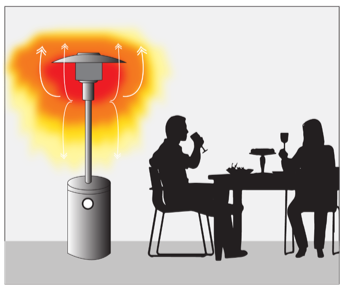
a) CONVENTIONAL HEAT: Conventional outdoor heaters emit hot air that mixes with ambient air, enabling them to raise the average temperature of an area. As such they not only warm people, but also the air around them, making them highly inefficient as the majority of the heat is dissipated – ultimately wasting energy.
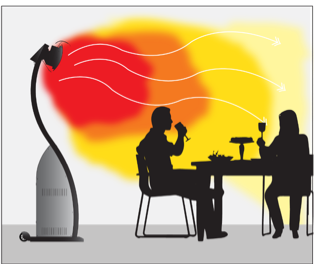
b) INFRARED HEAT: More innovative outdoor heaters use infrared heat. This method heats the target objects themselves as they come into contact with waves of infrared light. Unlike conventional mushroom heaters that warm the air around objects, infrared heaters work by projecting infrared radiation directly at the object to be warmed. This method is considered the most energy-efficient and effective method to heat people in an outdoor setting.
Direct or indirect heat?
Another critical factor is the manipulation of the direction of the emitted heat. The most effective heaters use directional heating elements to maximise energy efficiency and to avoid the over-heating of guests. Directional heat ensures that the majority of the heat produced is pushed in one direction, therefore allowing for a better and more targeted heat coverage. Indirect heat, on the other hand, pushes warmth in all directions, resulting in a vertical heat loss. Heaters with directional heating elements will be of particular benefit in places like bigger cities like New York where the local government has recently mandated a five feet distance between diners and heaters.
Short, medium or long wave?
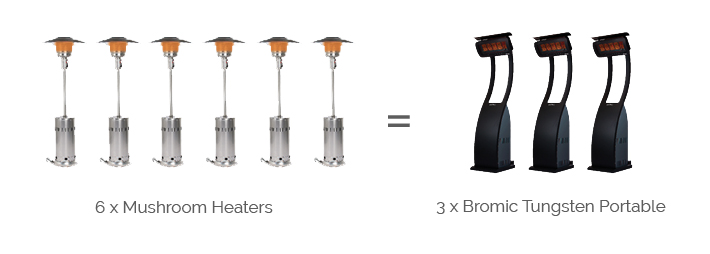
Whether your outdoor heater emits direct or indirect heat will also affect how much energy it uses. Freestanding heaters that use directional heating technology, like the Bromic Tungsten Freestanding , can cover twice the area as traditional mushroom heaters. The reason for this is that direct heat is a mixture of short and medium wave technology, which produces the highest levels of efficiency. Indirect outdoor heaters, on the other hand, are usually based on long wave technology, which is more susceptible to wind and has a much slower heat up time than direct heaters.
How much will it cost?
Freestanding heaters will approximately last around 9 hours on a single 9kg tank of LPG, depending on how powerful the heater is (usually between 30– 40MJ). Considering that one tank costs about $30 per refill, the cost benefits of a Bromic Tungsten Freestanding will quickly add up! For example, any pub and restaurant that currently has 6 mushroom heaters installed, could save around $45 every day, assuming that one tank of propane lasts for around 2 dinner services.
Still confused?
At Bromic Heating, we’re experts at designing cutting-edge outdoor heating solutions that provide the highest level of performance. Together with our complimentary outdoor design service, we are able to provide the products and expertise to ensure your outdoor patio delivers the highest level of thermal comfort at the maximum ROI.